NBI Clearance Sample 2026: What It Looks Like, Check Field by Field
An NBI Clearance Sample helps you understand what an actual NBI Clearance looks like before applying or checking a document. Whether you need to review your own clearance, examine one provided by someone else, or confirm that the printed details appear correct, knowing what each field means makes the process easier. This guide explains the document’s layout, personal information, clearance status, and remarks so you can understand the details shown on the page.
NBI Clearance Sample also helps you to recognize the correct entries for a married applicant and understand the supporting documents that may be needed in specific situations. These include an NBI Clearance authorization letter for an authorized representative and an affidavit of denial when a clearance contains a record or similar name that requires further clarification. By reviewing these examples, you can better understand the paperwork and identify details that may need attention.
What Does an NBI Clearance Sample Actually Show?
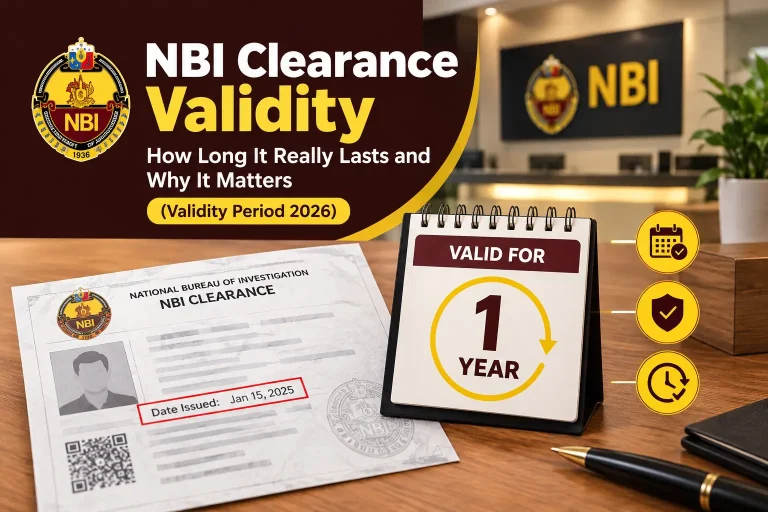
A genuine NBI Clearance is a small, machine-printed card on official security paper, not a plain printout. You can see what information NBI Clearance documents show and what it looks like with the help of the image given below:
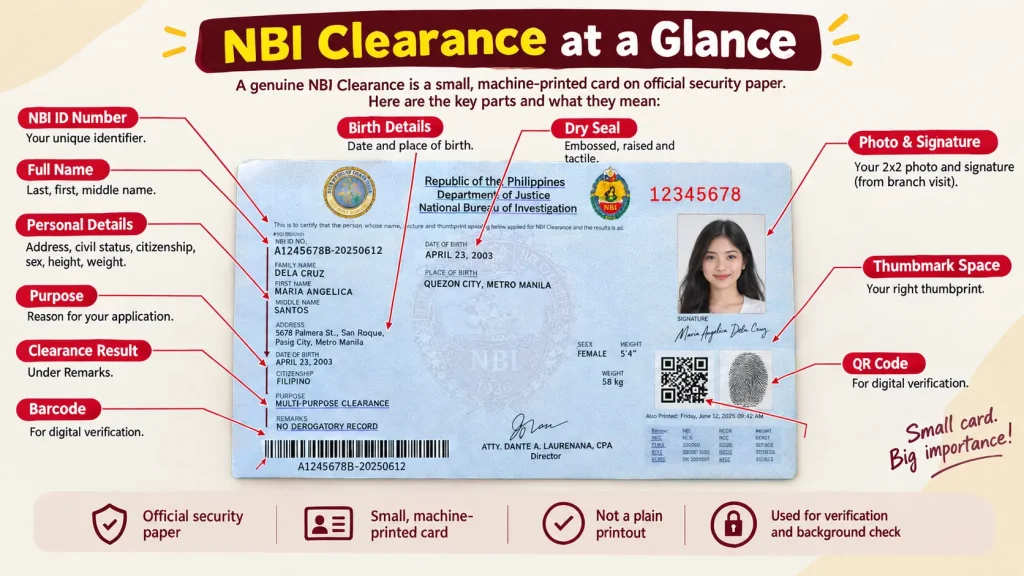
Field | What Appears |
Photo and signature | Your 2×2 photo and signature, captured during your branch visit |
Full name | Last, first, and middle name |
Birth details | Date and place of birth |
Personal details | Civil status, citizenship, sex, height, weight, address |
Purpose | The stated reason for your application, printed on the document |
Clearance result | Shown under Remarks, covered in detail below |
NBI ID number | Your unique identifier tied to this clearance record |
QR code and barcode | For digital verification |
Dry seal | An embossed NBI seal, raised and texturable |
Thumbmark space | Your right thumbprint |
NBI Clearance Sample Remarks: What Each Result Means
The Remarks field is the line everyone looks at first, since it’s the actual result of your background check. A few different phrasings can appear here, and they don’t all mean the same thing.
Possible NBI Clearance Remarks and Their Meanings
If you want to verify the NBI Document of yourself or your employee, visit our full guide on NBI Online Verification. It will help you to verify in only a few seconds.
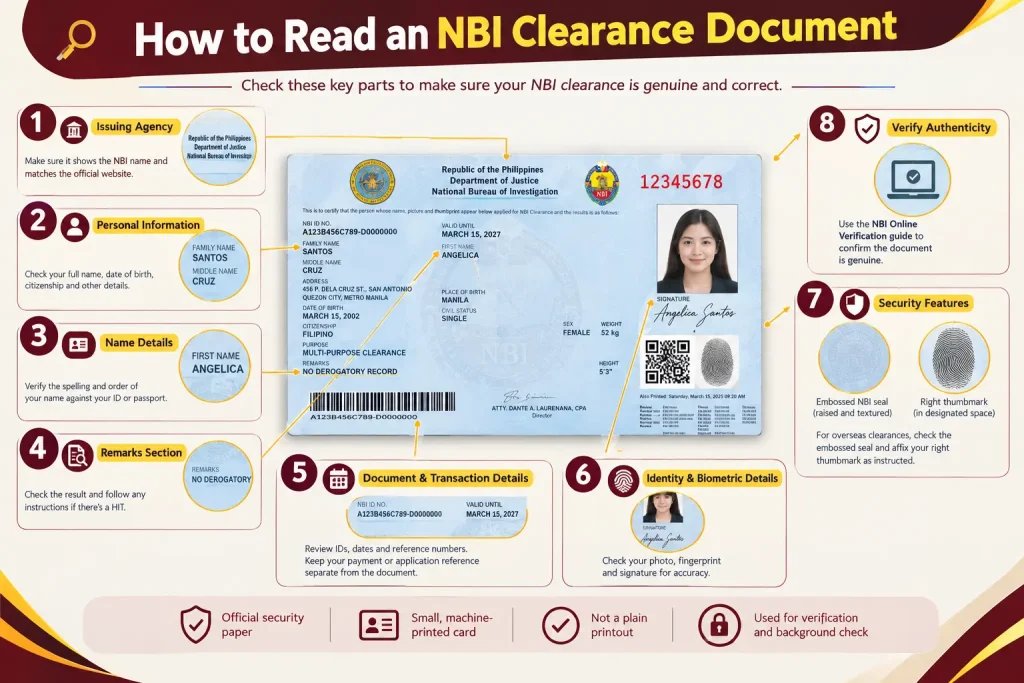
How to Read an NBI Clearance Document?
NBI Clearance Sample AKA Field: What It Means and When to Use It
AKA stands for “also known as,” and it’s where any alias, maiden name, or alternate legal name gets listed, so the background check covers every name you’ve used.
When you don’t need one:
If your full name on the clearance matches your PSA birth certificate exactly, your husband’s surname is listed where applicable, and your civil status shows as married with no other name discrepancies anywhere in your documents, you generally don’t need a separate AKA entry.
When you do need one:
If you have used different names on official documents, such as your maiden name on some records and your married name on others, NBI staff may ask for supporting documents before adding an AKA entry to your NBI Clearance. Depending on your situation, you may need to provide an annotated birth certificate, court documents confirming a legal name change, or an old passport showing your alternate name.
Sample for a Married Woman’s NBI Clearance
This is one of the more common points of confusion, since the form’s structure doesn’t always match how a married applicant’s documents are worded elsewhere.
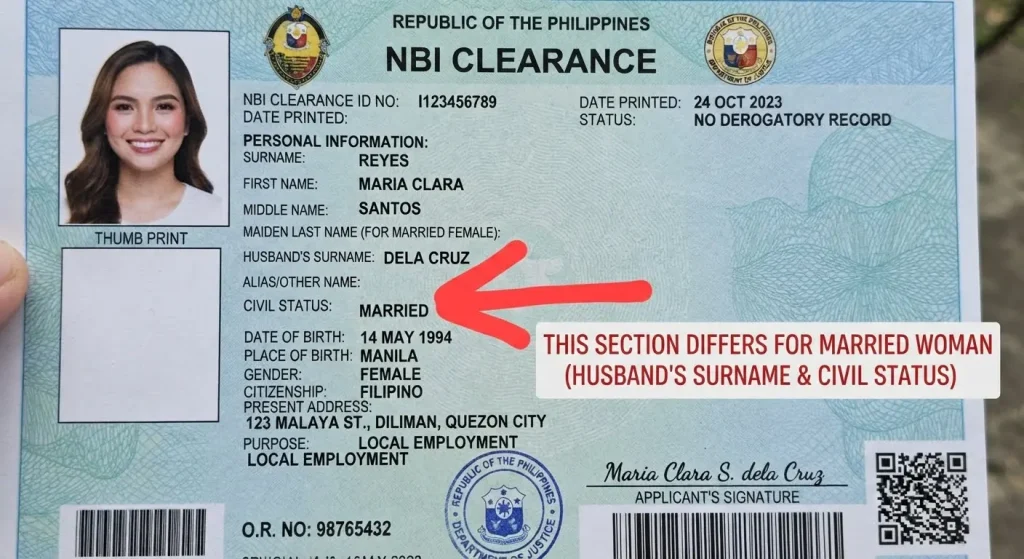
Sample for NBI Clearance Used Abroad
The document itself doesn’t change based on where you’re sending it; the same clearance works for every purpose. What differs is what the receiving country expects alongside it.
Authorization Letter Sample for Claiming NBI Clearance
If someone else is picking up your clearance on your behalf, NBI allows this, provided the representative brings the right paperwork.
What the Authorization Letter Needs
A valid authorization letter is dated, signed, and clearly states who is granting permission and who is receiving it. Based on consistently reported examples, it typically includes:
What Your Representative Needs to Bring
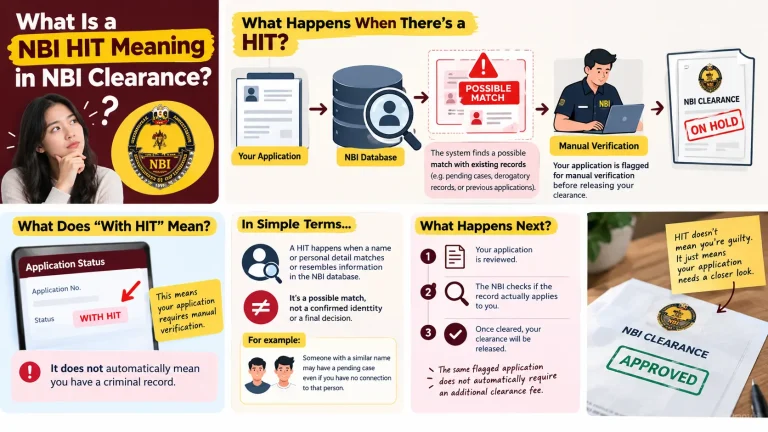
Affidavit of Denial Sample for an NBI HIT
When a HIT turns out to be a namesake match and the standard verification process isn’t enough on its own, NBI or a receiving authority may ask for a formal Affidavit of Denial. Check out the Affidavit given below:
What It Is?
An Affidavit of Denial is a sworn legal statement in which you formally deny being the person referenced in the matching record. It’s notarized and carries legal weight; false statements in it can lead to perjury charges, so it needs to be accurate and taken seriously.
What It Typically Contains
Based on actual Philippine consular templates, the affidavit generally states:
Common Mistakes Worth Avoiding for NBI Clearance Sample
A few recurring errors cause more rejected or delayed clearances than anything else:
FAQS
Conclusion
A genuine NBI Clearance sample follows a consistent format: your photo and personal details, a clearance result under Remarks, an NBI ID number separate from your appointment reference number, a QR code, and an embossed dry seal, all printed on security paper rather than plain stock. Knowing what belongs where, and scanning the QR code yourself, is the fastest way to confirm your own document is correct or to catch something that isn’t.
If your situation involves an AKA entry, a HIT, or claiming your clearance through someone else, the related documents — an affidavit, an authorization letter, follow fairly standard formats, but your specific requirements can vary by branch, embassy, or consulate. Where this guide couldn’t confirm a detail against an official NBI source, it’s said so directly, so when in doubt, confirm the current requirement with NBI or the consular office handling your case before you submit anything.