NBI Clearance for Abroad 2026: How to Apply & Travel Abroad?
Whether you are an OFW, permanent resident, student, dual citizen, or a Filipino tourist living abroad, you can apply an NBI Clearance for abroad without flying back to the Philippines. The National Bureau of Investigation (NBI) has a specific process for Filipinos overseas who need their NBI Clearance for work, study, immigration, visa applications, or other official purposes abroad.
In this guide, you will learn the actual ways to get your NBI Clearance while abroad, the required documents, the exact fees, and what you need to do after obtaining an apostille or other authentication for use in another country. We will also clear up the common NBI Clearance color myth that still causes confusion for applicants in 2026.
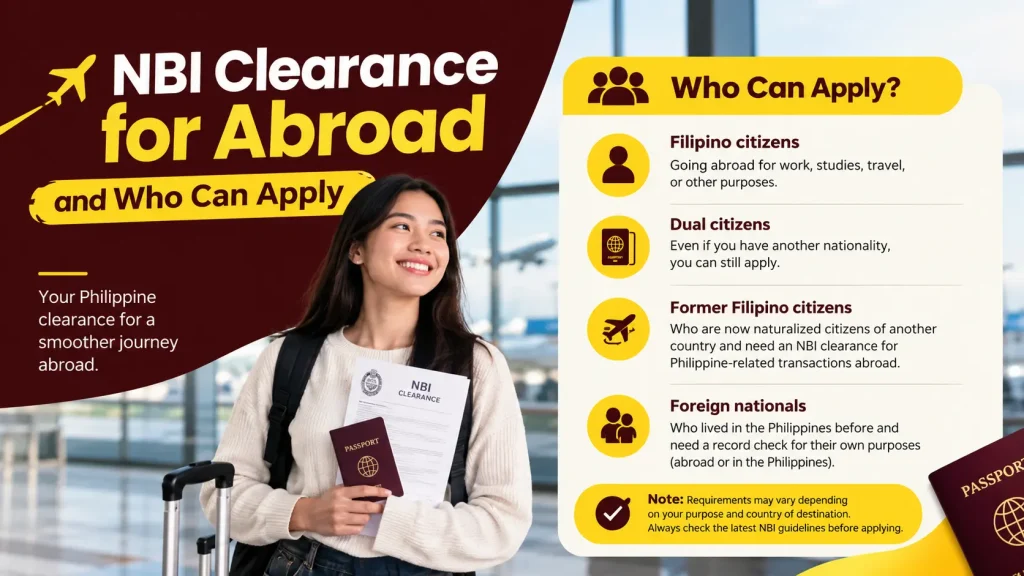
Who Can Apply for NBI Clearance Abroad?
The process mainly depends on your Philippine citizenship, location, and whether you are applying for a new clearance or a renewal. Your specific situation may affect which documents or application steps you need to follow.
Why this matters:
RA 9225 dual citizens may wonder whether reacquiring Philippine citizenship means they no longer need an NBI Clearance. It does not. An NBI record check may still be requested for Philippine transactions, property matters, legal filings, immigration, or other official purposes, even after completing the dual-citizenship process abroad.
There is also a different situation for foreign nationals who previously lived in the Philippines and now need a Philippine criminal record check for their own purposes. Their requirements can differ from those of a Filipino applicant abroad and may involve additional documents. Because this process can vary, it is best to confirm the current requirements directly with the NBI or the nearest Philippine Embassy or Consulate.
Requirements and Documents You’ll Need
Document | Purpose | Key Condition |
NBI Form No. 5 (Fingerprint Card) | Captures your rolled fingerprints for identity verification | Free from any Philippine Embassy or Consulate; must carry the official office seal |
2×2 photo | Identity confirmation | White background, taken within the last 3 months |
Photocopy of passport biodata page | Identity and citizenship proof | Must be clearly legible |
Old NBI Clearance | Required for renewal only | Must be issued in 2014 or later |
Notarized authorization letter | Authorizes a representative to act for you | Required only if someone else is submitting on your behalf |
Representative’s own valid ID | Confirms the representative’s identity at submission | Easy to forget – bring it alongside your documents |
Your fingerprints must be a rolled impression, signed and sealed by whoever takes them: embassy staff, a consular officer, or a police officer. They need to print their name, state their title, and stamp their office seal on the form. If you want to know all NBI requirements for any procedure, visit our NBI Clearance Requirements guide.
Note for married female applicants:
NBI requires this exact four-part name order on Form No. 5:
Getting this sequence wrong is a common reason forms get sent back for correction.
NBI Clearance for Abroad Methods 2026
There are two legitimate methods for applying from outside the Philippines. Both route through the same office in Manila; they just differ in how your documents and biometrics get there.
A note before we go further is that some guides describe a third “option”, applying directly through your embassy, which then forwards your full application to NBI Manila for you, with processing taking four to eight weeks. This isn’t confirmed on NBI’s own mailed-clearance instructions, which describe the embassy’s role as fingerprinting and authentication only, not full application handling. Treat that third option with caution until you’ve confirmed it directly with your specific embassy; it may reflect a particular post’s informal practice rather than a nationwide NBI process.
Method 1: Mail It Yourself or Through a Representative
You get fingerprinted locally, then either mail your documents to NBI yourself, or authorize someone in the Philippines to submit and claim them for you.
Method 2: Online with Overseas Delivery
You apply directly through clearance.nbi.gov.ph, skip the branch step entirely, pay online, and have your printed clearance couriered to your address abroad.
The explanation for both methods to apply for NBI abroad is given below.
How to Apply via Mail or Representative (Step by Step)
Applying for an NBI Clearance abroad through Mail or an Authorized Representative is explained in detail to help you in real life.
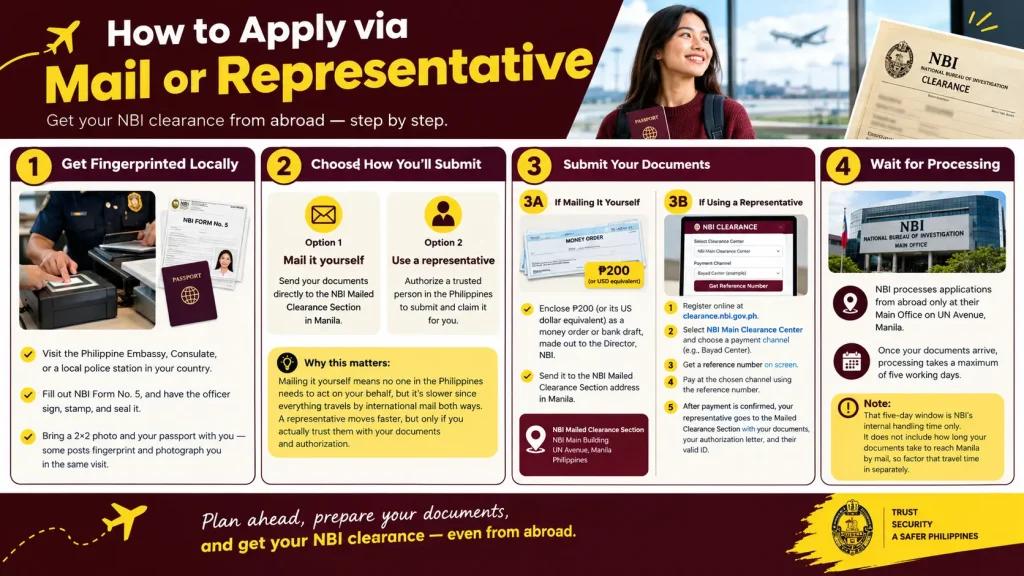
Step 1: Get Fingerprinted Locally
Visit the Philippine Embassy, Consulate, or a local police station in your country. Fill out NBI Form No. 5, and have the officer sign, stamp, and seal it. Bring a 2×2 photo and your passport with you; some posts fingerprint and photograph you during the same visit.
Step 2: Choose How You’ll Submit
Step 3A: If Mailing It Yourself
Enclose ₱200 (or its US dollar equivalent) as a money order or bank draft, made out to the Director, NBI, and send it to the NBI Mailed Clearance Section address in Manila.
Step 3B: If Using a Representative
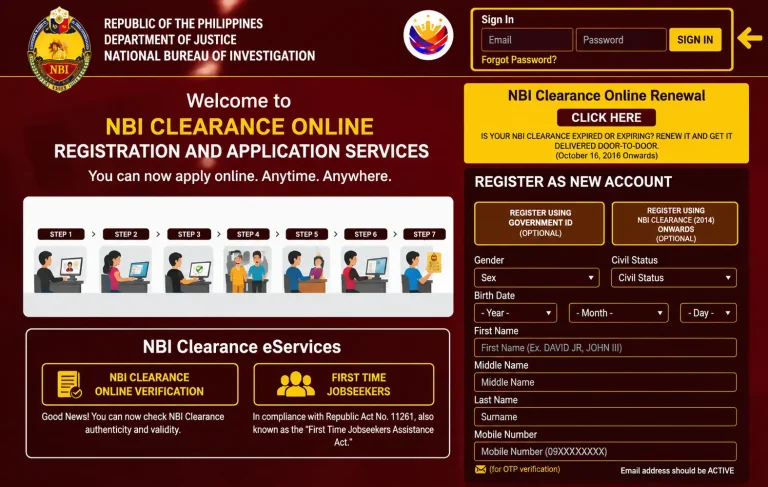
Before heading to the Mailed Clearance Section, your representative must first register online at clearance.nbi.gov.ph. They’ll select NBI Main Clearance Center as the preferred site, choose a payment channel, NBI’s own instructions name Bayad Center as an example, and secure a reference number on screen.
Your representative then presents that reference number at the chosen payment channel to complete payment. Only after payment is confirmed does your representative proceed to the NBI Mailed Clearance Section with your documents, your authorization letter, and their own valid ID.
Step 4: Wait for Processing
NBI processes applications from abroad only at their Main Office on UN Avenue, Manila. Once your documents arrive, processing takes a maximum of five working days.
How to Apply Online with Overseas Delivery
Overseas delivery allows eligible applicants to complete the application without returning to the Philippines just to obtain the document.
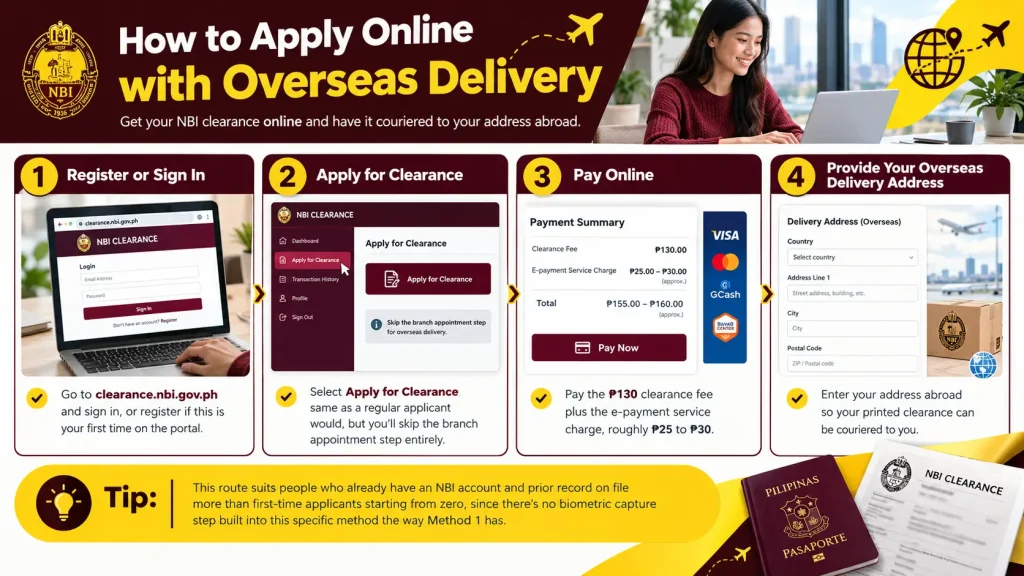
Step 1: Register or Sign In
Go to clearance.nbi.gov.ph and sign in, or register if this is your first time on the portal.
Step 2: Apply for Clearance
Select Apply for Clearance, same as a regular applicant would, but you’ll skip the branch appointment step entirely.
Step 3: Pay Online
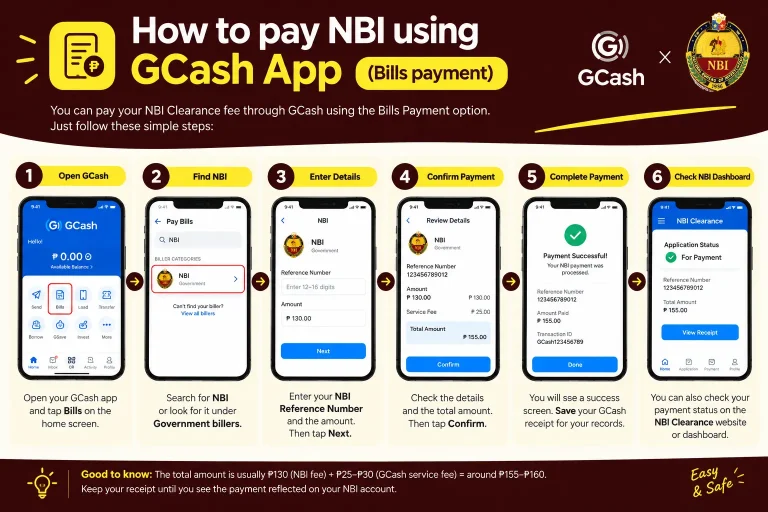
Pay the ₱130 clearance fee plus the e-payment service charge, roughly ₱25 to ₱30.
Step 4: Provide Your Overseas Delivery Address
Enter your address abroad so your printed clearance can be couriered to you.
When You Receive Your Clearance
Two things NBI explicitly instructs you to do the moment your clearance arrives, whether by mail, through your representative, or by courier:
After receiving your NBI Clearance, you can also verify it online to confirm it exists in the NBI System through our NBI Verification Guide.
Comparison Table: Choosing the Best Method
Method | Accessibility | Speed | Convenience | Notes |
Mail it yourself | Any country with mail service | Slower – international mail both ways | Medium | No representative needed |
Authorized representative | Needs a trusted person in PH | Faster – in-person submission | High | Requires online pre-registration before submission |
Online with overseas delivery | Any country, online access | Depends on courier | High | Best for renewals or existing accounts |
So, using an authorized representative is the best method if speed matters, and you have someone reliable in the Philippines, because it skips international mail delays on both ends and lets your clearance get claimed the moment it’s ready.
Situation-Based Guide: Which Route Fits You
Situation | Best Route | Main Requirement |
First-time applicant abroad | NBI Form No. 5 with fingerprints | Fingerprint card from a Philippine Embassy, Consulate, or police station, plus photo and passport copy |
Previous NBI Clearance issued from 2014 onward | Renewal by mail or representative | Old NBI Clearance, passport copy, photo, authorization letter if using a representative |
Need faster processing, have a trusted person in the Philippines | Authorized representative | Online pre-registration, authorization letter, payment reference, representative’s own valid ID |
Applying for OFW or POEA deployment specifically | Either method, timed carefully | A clearance employers commonly expect to be issued within the last six months, even though NBI’s own validity is one year |
NBI Clearance Fees for Abroad 2026
Route | Total Cost | Breakdown |
Mail it yourself | ₱200 (or USD equivalent) | ₱130 clearance fee + ₱70 mailing cost |
Authorized representative | ₱130 + payment channel’s service charge | No mailing cost, paid online before submission |
Online with overseas delivery | ₱130 + ₱25–30 e-payment fee + courier charge | Courier cost is the unpredictable part |
Embassy/consulate notarial fee | Varies by post (e.g. ~USD 25 in New York, JPY 5,250 in Tokyo) | Separate from NBI’s own fee |
Getting It Apostilled for Use Abroad
If the country you’re sending your NBI Clearance to is a member of the Apostille Convention, which covers most of Europe, Japan, South Korea, and many other destinations, you’ll likely need it apostilled before it’s accepted. This is a separate step through the Department of Foreign Affairs (DFA), not a different kind of NBI Clearance.
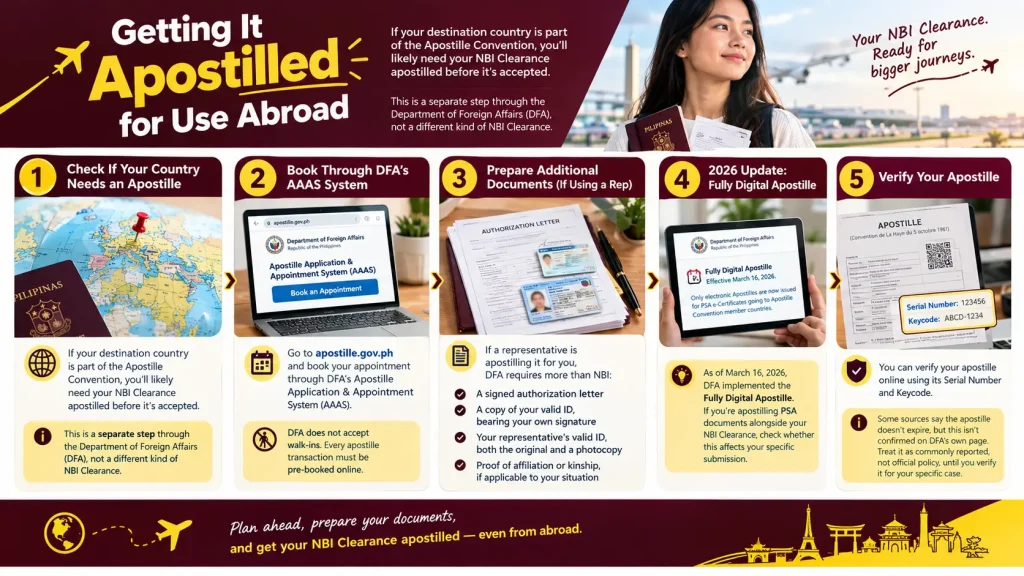
How to book it:
Apostille applications go through DFA’s Apostille Application & Appointment System (AAAS) at apostille.gov.ph. DFA does not accept walk-ins; every apostille transaction must be pre-booked online.
If a representative is apostilling it for you, DFA requires more than NBI does for the clearance itself:
A 2026 update worth knowing:
As of March 16, 2026, DFA implemented the Fully Digital Apostille, meaning only electronic Apostilles are now issued for PSA e-Certificates going to Apostille Convention member countries. If you’re apostilling PSA documents alongside your NBI Clearance, check whether this affects your specific submission.
Verifying an apostille:
Once issued, an apostille can be verified online using its Serial Number and Keycode. Some sources report that, unlike the NBI Clearance itself, the apostille certificate doesn’t expire, though this isn’t something I’ve confirmed directly on DFA’s own page, so treat it as commonly reported rather than official policy until you verify it for your specific case.
One Clearance for Every Purpose (No, You Don’t Need a “White” or “Yellow” Version)
There is a common NBI Clearance myth that is still circulating in 2026: some guides claim you need a specific “color” of NBI Clearance for overseas use, white, labeled “Multi-Purpose,” as opposed to yellow, blue, or red versions for other purposes. Others tell you to select “Foreign Travel/Employment Abroad” as a purpose during application, warning that choosing the wrong one means your clearance won’t be accepted internationally.
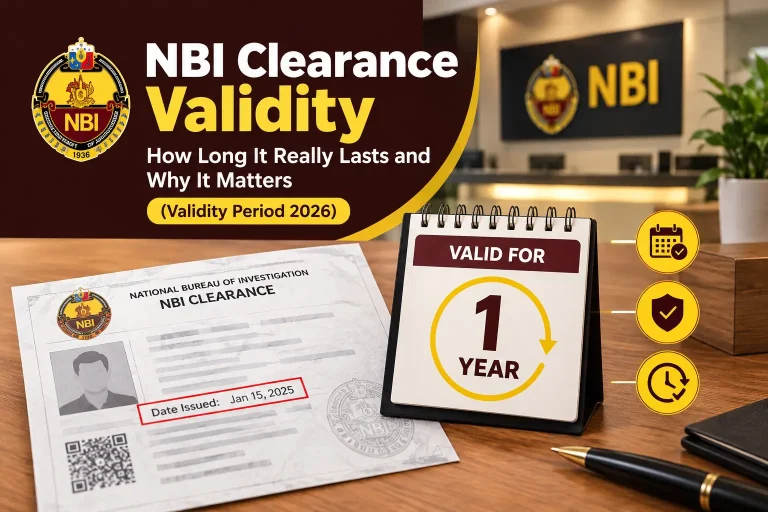
None of this is accurate anymore. NBI used to issue different clearance types for different purposes, and those old yellow (local) and green (abroad) versions existed years ago. They don’t exist today. There is no white, yellow, blue, or red clearance; there’s one single NBI Clearance that works for every purpose, and you are not asked to select “travel abroad” or “work abroad” as a purpose during your application.
Countries That Commonly Require NBI Clearance for Abroad
Several other Gulf and European countries with large Filipino communities may require this document for immigration, employment, or visa processing. However, document requirements, validity periods, and formatting rules can vary by country and application type. Always confirm the latest requirements directly with the relevant embassy, consulate, immigration authority, or employer before submitting your application.
Tips for Applying from Abroad
Confirm the Embassy’s Fingerprinting Schedule First
Not every consular office offers walk-in fingerprinting daily; some require an NBI for abroad online appointment booked in advance. Schedules can change, so check the embassy or consulate’s current instructions before travelling there. Ask whether you need to bring a completed form, passport photos, or any additional identification. Doing this first can save you an unnecessary trip, especially if the office only accepts applicants on specific days.
Keep a Digital Copy of Every Document Before Mailing Originals
If anything gets lost in transit, you won’t be starting from zero. Take clear photos or scans of your fingerprint card, identification, payment document, and other paperwork. Save the copies somewhere you can access easily, such as your phone and a secure cloud account. This also makes it much easier to check what you originally sent if NBI asks about a missing or incomplete document
Use a Money Order or Bank Draft, Not Cash
NBI’s instructions specify this exact payment format for mailed applications. Before sending anything, make sure the payment is issued in the exact name and amount required by NBI. Do not substitute cash simply because it seems easier or faster. A payment that does not meet NBI’s instructions can delay processing or lead to the package being returned.
Choose Your Representative Carefully
Have them register online before heading to NBI. They’re handling your personal documents and payment, and skipping the online pre-registration step will stall them at the counter. Choose someone reliable who understands that they are submitting official documents on your behalf. Give them clear written instructions about what they need to bring and what they are allowed to do for you. Keeping communication open can prevent mistakes when your representative reaches the NBI office.
Don’t Assume Online Delivery Is Faster Than Mail
International courier timing varies widely by country. Ask your courier for a realistic estimate before counting on a specific date. The application itself may be processed quickly, but delivery still depends on the courier and your destination country. Allow some extra time for weekends, holidays, customs, or unexpected delivery delays. This is especially important when you need the clearance for a visa, job, school, or other deadline.
Double-Check the Embassy’s Official Seal on Your Fingerprint Card
Make sure the seal is present before you leave. A missing seal can result in the application being sent back. Look over the fingerprint card while you are still at the embassy or consulate. Check that the officer has completed the required portions and that the seal is clearly visible. Fixing an omission immediately is much easier than sending the paperwork internationally and discovering the problem later.
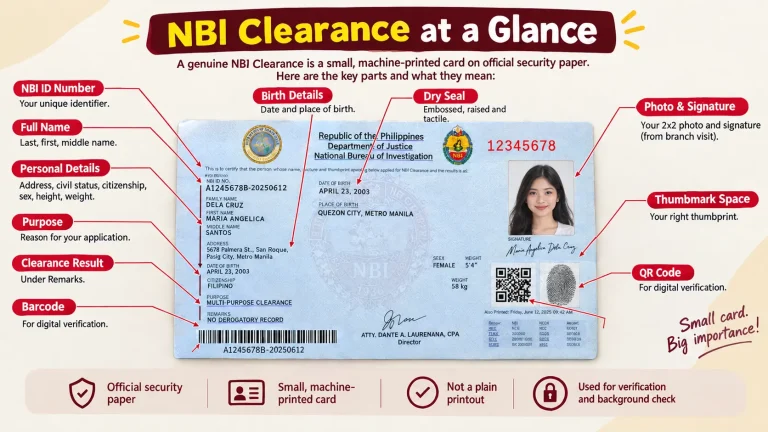
Check for the Dry Seal and Sign Your Thumbmark When Your Clearance Arrives
Both are required by NBI, and skipping them can cause problems later. When your clearance arrives, open the package and inspect the document before putting it away. Complete the required thumbmark or other final step exactly as instructed by NBI. Keep the finished document safe, especially if you still need it for authentication, apostille, or submission to a foreign authority.
Budget for the Embassy’s Notarial Fee Separately
The embassy’s notarial fee and NBI’s fee are separate charges from two different offices. The amount you pay at the embassy is not necessarily included in the NBI application cost. Ask the embassy in advance about its current notarial or certification fee and accepted payment method. Planning for both charges helps you avoid being short on money during your appointment.
Confirm Your Old Clearance Was Issued in 2014 or Later
This can affect which requirements apply to you when renewing. Check your previous NBI Clearance and confirm the original issue date before starting the renewal process. Do not rely only on your memory, especially if the old document was issued several years ago. Having the exact date ready can help you determine which renewal route and supporting documents apply to your case.
Book an Apostille Appointment Online in Advance
If you need an apostille, use apostille.gov.ph and check the latest DFA appointment requirements before going. Do this after confirming that your destination country actually requires an apostille for your document. Prepare your NBI Clearance and any supporting documents before your scheduled appointment date. Checking the latest DFA instructions can help you avoid arriving with an incomplete application.
FAQs
Conclusion :
Getting your NBI Clearance from abroad doesn’t require a flight home, just the right documents and the right method for your situation. If you’re applying for the first time, the fingerprint card route through your embassy is your only real option. If you already have a prior clearance and want speed, an authorized representative, properly registered online first, is genuinely the fastest path. Once you have it in hand, check the dry seal, sign your thumbprint, and if your destination country needs it, book your DFA apostille early since appointments are required. And don’t let outdated advice about clearance “colors” or “purposes” steer you wrong; one clearance works for everything. I really suggest confirming your embassy’s exact fingerprinting process before you start anything else, since that one step shapes your entire timeline from there.